 "Revolutionizing Data Extraction, Unlock Hidden Data, Unlock New Possibilities"











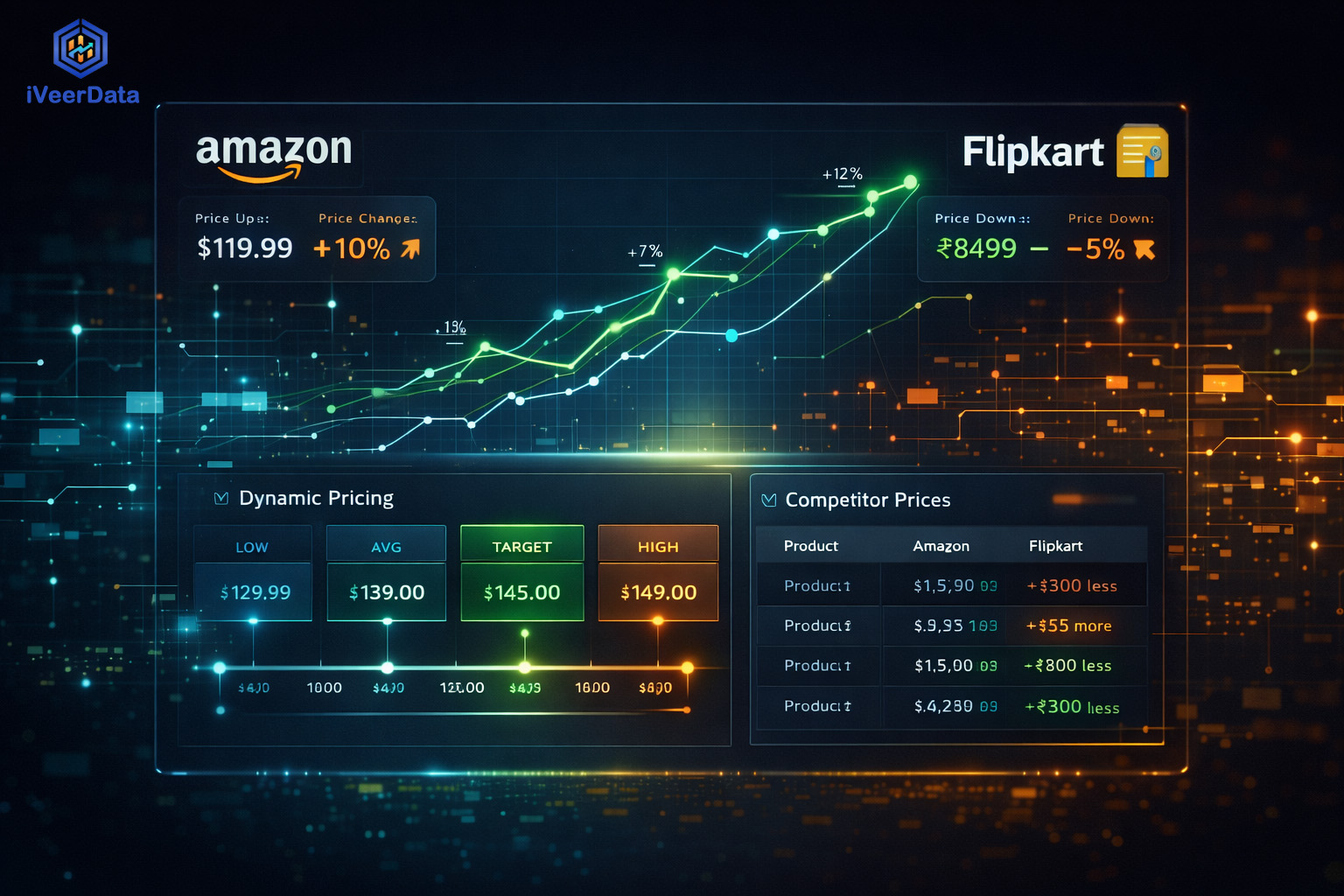
The Hidden Cost of Static Pricing in E-commerce
Most e-commerce businesses still rely on static pricing—updating product prices weekly or manually during sales. Meanwhile, marketplace leaders like Amazon and Flipkart adjust prices multiple times a day using real-time data.
The result?
Brands without automated price tracking silently lose revenue, Buy Box visibility, and competitive positioning. This is where Dynamic Pricing powered by E-commerce Intelligence delivers measurable ROI.
What Is Real-Time Dynamic Pricing?
Dynamic pricing is a strategy where product prices are automatically adjusted based on live market conditions such as:
- Competitor pricing changes
- Product stock availability
- Demand fluctuations
- Active discounts and offers
- Seller performance metrics
To enable this at scale, e-commerce giants rely on web scraping—collecting real-time marketplace data without API delays or restrictions.
Case Study: Pricing With vs Without Scraping
Let’s look at a simplified real-world scenario.
Seller A: Manual Pricing (No Scraping)
- Prices updated once per week
- Misses competitor discounts and flash sales
- Loses Buy Box during high-traffic hours
- Overprices products when competitors go out of stock
Impact:
Revenue leakage of 8–15% per month due to delayed reactions.
Seller B: Real-Time Pricing Intelligence
By using automated price scraping:
- Competitor prices tracked every 30–60 minutes
- Prices adjusted dynamically to stay competitive
- Stock gaps identified to increase margins
- Buy Box ownership optimized
Result:
✔ 12–25% revenue increase
✔ Higher conversion rates
✔ Better control over profit margins
This is the exact pricing logic used by top marketplace sellers.
How Web Scraping Powers E-commerce Intelligence
Web scraping turns raw marketplace data into actionable insights:
- Track competitor prices across thousands of SKUs
- Monitor stock availability to time price increases
- Identify discount patterns and pricing wars
- Analyze seller rankings and Buy Box trends
For example, brands using our
Amazon Price & Stock Scraping Service
gain real-time visibility across ASINs without being limited by Amazon’s API constraints.
Pricing Intelligence Beyond Amazon: Flipkart Use Case
Flipkart pricing is even more volatile due to:
- Frequent category-based promotions
- Seller-driven discounting
- Inventory-led price fluctuations
With Flipkart Product Data Extraction, businesses can:
- Track daily price changes
- Monitor top-performing sellers
- Adjust pricing during high-traffic sales events
This data-driven approach helps sellers stay competitive during events like Big Billion Days and seasonal sales.
The Real ROI of Automated Price Tracking
Let’s put numbers to it.
If your store generates:
- ₹50,000 per day in revenue
- 500 active SKUs
Even a 5% pricing inefficiency results in:
- ₹75,000+ lost per month
- ₹9+ lakhs lost annually
Dynamic pricing isn’t just optimization—it’s revenue protection.
Why APIs Alone Are Not Enough
Marketplace APIs often come with:
- Data delays
- Rate limits
- Partial visibility
Web scraping provides:
- Near real-time updates
- Full competitor coverage
- Custom frequency and scale
- Independence from platform restrictions
That’s why modern E-commerce Intelligence platforms are scraping-first.
Who Should Use Dynamic Pricing Intelligence?
This strategy is ideal for:
- Amazon and Flipkart sellers
- D2C brands
- Pricing and revenue teams
- Retail analytics platforms
- E-commerce aggregators
If pricing impacts your margins, relying on static data is already costing you money.


