 "Revolutionizing Data Extraction, Unlock Hidden Data, Unlock New Possibilities"











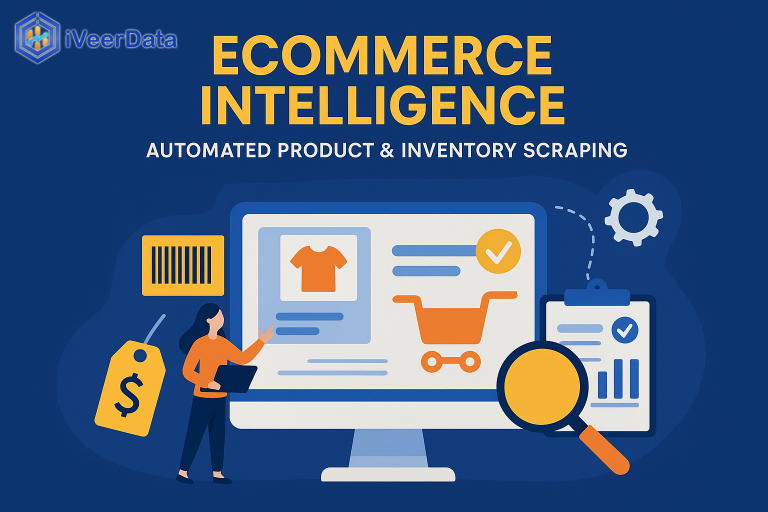
The ecommerce industry in 2025 is driven by real-time data, hyper-competitive pricing, rapidly changing inventory levels, and constantly shifting customer demand. Brands that win today are not just selling products—they are using ecommerce intelligence powered by automated web scraping to track products, monitor competitors, optimize inventory, and gain market-wide visibility. Automated product scraping and inventory scraping have become essential tools for ecommerce growth, dynamic pricing, and profit optimization.
Businesses now rely on ecommerce scraping solutions to collect up-to-date information on millions of product listings, marketplace catalogs, retail websites, and direct-to-consumer platforms. With automated data extraction, companies no longer guess trends—they track product availability, pricing fluctuations, seller behavior, customer reviews, and promotional activity across the entire ecommerce ecosystem.
Why Ecommerce Intelligence Matters in 2025
Ecommerce intelligence combines automated product scraping, inventory scraping, competitor data extraction, and real-time price monitoring to form a complete view of the digital market. With online retail becoming more aggressive than ever, businesses are forced to respond quickly to stock changes, pricing updates, new launches, and catalog adjustments across marketplaces like Amazon, Walmart, Flipkart, Shopee, and niche ecommerce stores.
Without automated data scraping, ecommerce brands operate blindly. Modern ecommerce scraping solutions provide real-time insights that support dynamic pricing engines, stock forecasting tools, promotion strategies, and product lifecycle decisions. Companies that embrace ecommerce data extraction outperform competitors because they have continuous access to clean, structured, real-time market intelligence.
The Role of Automated Product Scraping in Ecommerce
Automated product scraping allows businesses to extract detailed product information from ecommerce websites and online marketplaces. This includes product titles, descriptions, pricing, attributes, SKUs, categories, variants, images, specifications, and customer reviews.
In 2025, product scraping is no longer optional—it is the backbone of ecommerce intelligence. Brands use automated product extraction to enrich their product catalogs, track new product launches, study competitor product positioning, analyze product features, and understand market gaps. Product scraping engines help businesses identify hot-selling items, low-competition niches, seasonal opportunities, and emerging industry trends.
By combining product data scraping with market intelligence dashboards, ecommerce companies gain unparalleled visibility into the digital market. Automated extractors continuously monitor category performance, sponsored listings, search rankings, and competitor product feeds, enabling data-driven decisions at every stage.
The Strength of Automated Inventory Scraping
Inventory scraping tracks product availability, stock levels, out-of-stock alerts, restock patterns, and inventory movement across online marketplaces. For ecommerce brands, monitoring inventory data in real time is crucial for understanding competitor weakness, demand forecasting, supply chain planning, and pricing opportunities.
Automated inventory scraping gives retailers accurate insights into stock levels across thousands of SKUs and multiple competitors. When a competitor runs out of stock, brands can increase visibility on ads, raise prices strategically, or push promotional campaigns to capture market share. Inventory data scraping ensures that businesses react instantly to market conditions rather than waiting for delayed analytics.
With advanced scraping APIs and real-time data pipelines, inventory intelligence also helps retailers optimize reorder timings, manage stockouts, reduce overstocking, and align supply chain operations with real-time market behavior.
Competitor Monitoring Through Ecommerce Scraping
Competitor monitoring is one of the most powerful applications of automated ecommerce scraping. In a market where pricing changes every minute and stock levels shift constantly, brands rely on real-time competitor intelligence to stay ahead. Ecommerce competitor scraping tools track prices, discounts, promotions, new product listings, reviews, ratings, sponsored placements, search ranking positions, and catalog expansions.
This allows businesses to adjust their pricing strategies, improve product positioning, optimize advertising spend, and maintain competitive advantage. Without competitor monitoring, brands are left reacting to market conditions instead of anticipating them.
Dynamic Pricing Powered by Ecommerce Scraping
Dynamic pricing engines depend on accurate, real-time data. Automated product and inventory scraping deliver the data feed required for pricing algorithms to function effectively. Real-time product data extraction ensures that businesses always know the optimal price point, competitor pricing trends, marketplace fluctuations, and demand-driven pricing shifts.
With live ecommerce scraping pipelines, dynamic pricing tools can automatically adjust product prices based on competitor stockouts, new listings, market demand, seasonal spikes, and cost changes. This leads to increased sales, improved margins, and optimized profitability.
Benefits of Automated Product and Inventory Scraping for Ecommerce
The benefits of ecommerce scraping are clear: real-time data, improved pricing accuracy, deeper market understanding, enhanced product lifecycle management, and superior inventory control. Automated data extraction helps businesses scale faster, eliminate manual research, reduce errors, and achieve operational efficiency.
Ecommerce brands use scraping solutions to monitor product feeds, analyze customer sentiment, track category performance, measure demand patterns, and identify opportunities across global marketplaces. With ecommerce intelligence tools, businesses build a data-first strategy that ensures long-term growth.
Integrating Ecommerce Scraping With Business Intelligence Tools
Modern ecommerce companies integrate product scraping and inventory scraping into advanced BI dashboards, analytics tools, and forecasting engines. Real-time scraping APIs deliver structured data directly into workflows such as pricing engines, inventory management systems, competitor monitoring tools, promotions dashboards, and demand forecasting platforms.
This integration allows brands to automate decision-making, run predictive models, and manage ecommerce operations with precision. Ecommerce intelligence becomes a core part of business success, driving data-backed strategies across merchandising, marketing, supply chain, and finance.
Conclusion
Ecommerce intelligence powered by automated product and inventory scraping has become essential for business success in 2025. With real-time data extraction, competitor monitoring, dynamic pricing, stock tracking, and advanced analytics, businesses gain a complete view of the ecommerce market. Brands that adopt automated ecommerce scraping outperform competitors, optimize operations, and make faster, smarter decisions in a highly dynamic retail environment.


