 "Revolutionizing Data Extraction, Unlock Hidden Data, Unlock New Possibilities"











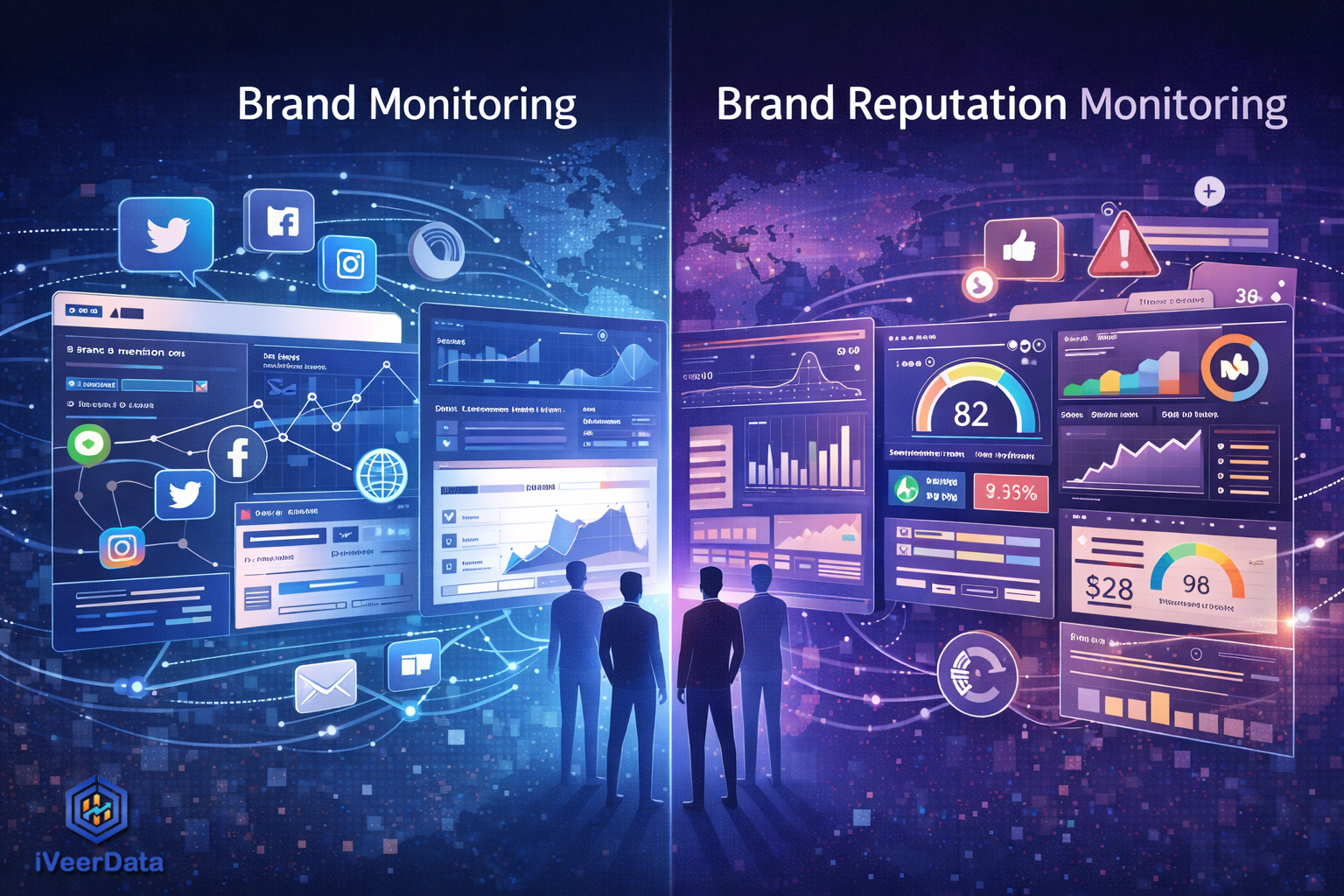
Brand Monitoring vs Brand Reputation Monitoring: What Enterprises Really Need
For enterprises operating across multiple markets, channels, and customer touchpoints, brand perception can change in minutes. A viral tweet, a news article, or a competitor’s campaign can instantly influence public opinion. This is why brand monitoring and brand reputation monitoring have become critical — yet many organizations still confuse the two.
While closely related, these solutions serve very different strategic purposes. Understanding where they overlap — and where they don’t — helps enterprises choose the right intelligence framework.
The Growing Complexity of Brand Visibility
Today, brands exist everywhere:
- Social media platforms
- News websites and blogs
- Review portals and forums
- E-commerce marketplaces
- Mobile apps and digital ads
Manually tracking brand presence across this ecosystem is impossible. Enterprises need automated systems that continuously extract, analyze, and interpret brand-related data at scale.
This is where modern brand intelligence solutions come into play.
What Is Brand Monitoring?
Brand monitoring focuses on tracking brand mentions and visibility across digital channels. It answers the question:
👉 Where and how often is my brand being mentioned?
With advanced
enterprises can monitor:
- Brand mentions across websites and blogs
- Social media conversations and hashtags
- Product mentions on marketplaces
- Campaign reach and exposure
- Competitor brand comparisons
Brand monitoring is primarily observational and analytical — it shows what is happening across the digital landscape.
What Is Brand Reputation Monitoring?
Brand reputation monitoring goes deeper. It focuses on sentiment, credibility, and trust associated with your brand.
Using
enterprises can analyze:
- Positive vs negative sentiment trends
- Customer complaints and praise patterns
- Crisis signals and reputation risks
- Trust indicators across regions and platforms
- Long-term perception shifts
Reputation monitoring answers a different question:
👉 How do people feel about my brand — and why?
Why Social Media Data Is Central to Both
Social platforms are where brand narratives form fastest. A single post can amplify praise or trigger backlash within hours.
By integrating
into brand intelligence systems, enterprises gain access to:
- Real-time conversations
- Influencer-driven sentiment shifts
- Viral trend detection
- Platform-specific audience behavior
Social data is often the earliest signal of reputation change — making it essential for proactive monitoring.
The Role of News & Media Intelligence
Brand perception is not shaped by customers alone. Media coverage, press releases, and editorial opinions strongly influence trust.
With
enterprises can track:
- Brand mentions in news articles
- Industry narratives affecting perception
- Regulatory or compliance-related coverage
- Competitor media exposure
News data helps enterprises understand external narratives, not just customer conversations.
What Enterprises Actually Need (The Real Answer)
For enterprises, the debate isn’t brand monitoring vs reputation monitoring — it’s how to combine both into a unified intelligence strategy.
The most effective approach includes:
- Brand monitoring for visibility and competitive benchmarking
- Reputation monitoring for sentiment, trust, and risk detection
- Social media scraping for real-time signals
- News aggregation for authoritative context
Together, these layers create a 360-degree brand intelligence system.
When Brand Intelligence Becomes a Competitive Advantage
Enterprises that invest in integrated brand intelligence can:
- Detect reputation risks early
- Respond to crises before escalation
- Align messaging with market sentiment
- Benchmark against competitors continuously
- Protect long-term brand equity
In fast-moving digital markets, brand intelligence is no longer a marketing tool — it’s a strategic asset.


